
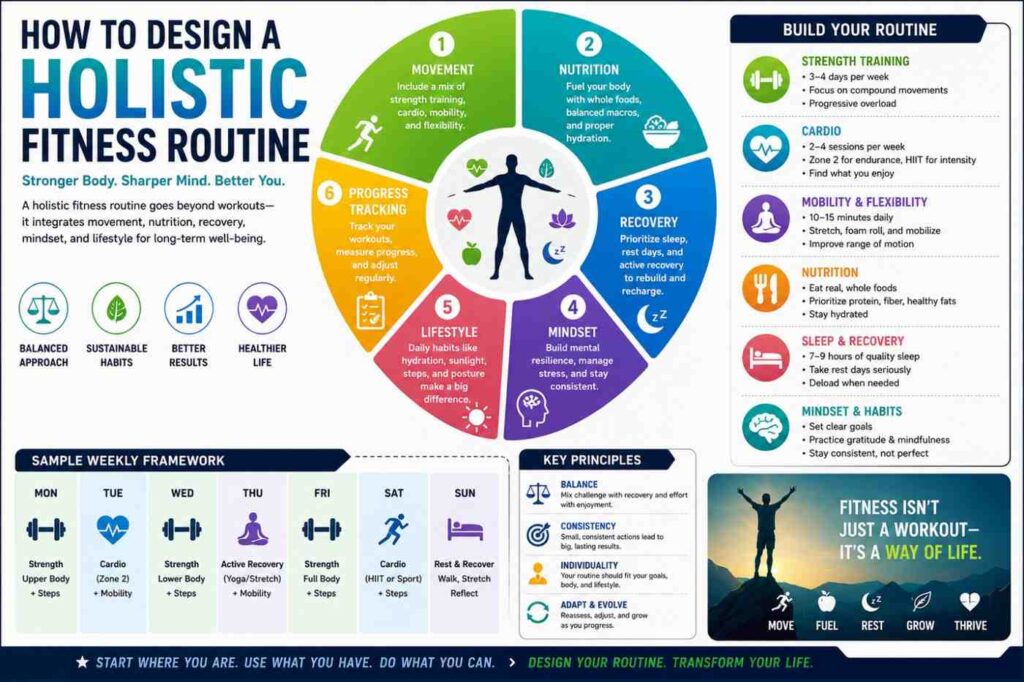
How to Design a Holistic Fitness Routine
Designing a holistic fitness routine involves creating a balanced approach to health that goes beyond just exercise. It focuses on integrating physical training, nutrition, mental well-being, and recovery into one structured plan. The goal is to improve overall health, not just build strength or lose weight, making fitness more sustainable in the long term.
A well-designed holistic routine considers individual lifestyle, fitness level, and personal goals. Instead of following a generic workout plan, it adapts to what the body needs and what the person can realistically maintain. This ensures consistency, which is one of the most important factors in achieving long-term results.
The foundation of a holistic fitness routine is balance. This means combining strength training, cardiovascular exercise, flexibility work, and rest in a way that supports overall physical and mental health. Each component plays a specific role in improving performance, preventing injury, and maintaining energy levels.
Another important aspect is sustainability and adaptability. A holistic routine should evolve over time as fitness levels improve and goals change. By regularly reviewing progress and making adjustments, individuals can ensure that their routine remains effective, enjoyable, and aligned with their long-term health objectives.
Understanding What a Holistic Fitness Routine Is
A holistic fitness routine is a structured approach to health and exercise that goes beyond simply working out to lose weight or build muscle. It focuses on developing the body, mind, and lifestyle together so that fitness becomes a sustainable long-term habit rather than a short-term challenge. Instead of isolating one goal—such as strength or endurance—it integrates multiple aspects of physical activity, recovery, nutrition, and mental well-being into a unified system.
In modern fitness science, this approach is widely recommended because it reduces the risk of burnout and injury while improving long-term adherence. A holistic fitness routine recognizes that exercise alone is not enough; sleep quality, hydration, stress levels, and daily movement patterns all influence results.
This method is especially valuable in today’s fast-paced lifestyle where people often struggle with consistency. By combining different types of training—such as strength work, cardio, flexibility exercises, and active recovery—it creates balance in the body.
Definition of Holistic Fitness
Holistic fitness refers to a complete and balanced approach to physical wellness where all components of health are trained together instead of in isolation. It includes strength, endurance, flexibility, mobility, mental clarity, and recovery, treating the body as a fully connected system rather than separate parts.
This approach focuses on improving overall well-being instead of targeting only one goal such as weight loss or muscle gain. It encourages a more sustainable and long-term view of fitness by ensuring that all aspects of health develop in harmony.
Holistic fitness also emphasizes the importance of lifestyle integration. It connects exercise with nutrition, sleep, and stress management to create a more complete and effective wellness system.
Why It Is Different From Traditional Workouts
Traditional workout programs usually focus on a single objective such as fat loss, muscle building, or endurance improvement. While these programs can be effective in the short term, they often overlook other important aspects of physical health such as mobility, flexibility, and recovery.
A holistic fitness routine, on the other hand, combines multiple training methods into one structured system. It integrates strength training, cardio, mobility work, and recovery practices to create a more balanced and sustainable approach.
This integrated method reduces the risk of injury, prevents burnout, and supports long-term consistency, making it more suitable for overall health and lifelong fitness.
Role of Mind-Body Connection
The mind-body connection plays a crucial role in both physical performance and recovery. Mental factors such as stress, anxiety, and lack of focus can negatively impact workout results and slow down progress.
When the mind is calm and focused, the body responds more efficiently during training sessions. Improved mental clarity also enhances motivation, discipline, and consistency in maintaining a fitness routine.
Practices such as meditation, yoga, and deep breathing exercises strengthen this connection by reducing stress, improving sleep quality, and supporting faster physical recovery after workouts.
Why a Holistic Fitness Routine Matters
A holistic fitness routine is important because it ensures balanced development of all key aspects of health, including cardiovascular fitness, muscular strength, mobility, flexibility, and mental well-being. Instead of focusing on one area of fitness, it creates a well-rounded approach that supports the body as a complete system.
This type of routine also helps prevent overtraining and reduces the risk of burnout by distributing physical stress across different types of activities. As a result, individuals are more likely to stay consistent with their fitness habits over the long term.
In addition, a holistic approach improves overall quality of life by making everyday movements easier and more efficient. It also reduces the risk of lifestyle-related health issues by promoting long-term physical balance and stability.
Long-Term Health Benefits
One of the major advantages of a holistic fitness routine is improved long-term health. Regular and balanced exercise supports heart health, strengthens bones, enhances metabolism, and improves joint function.
It also plays a significant role in reducing the risk of chronic diseases such as diabetes, cardiovascular conditions, and obesity. By maintaining overall body balance, it helps keep essential systems functioning efficiently.
Over time, these benefits contribute to a healthier and more active lifestyle, allowing individuals to maintain physical independence and vitality as they age.
Improved Performance and Recovery
A holistic routine enhances overall physical performance by combining strength training, cardiovascular exercise, and mobility work. This balanced approach helps the body perform better across different types of physical activities.
Proper recovery is also a key part of this system, as it allows muscles to repair and rebuild after exercise. This reduces fatigue and improves long-term endurance and strength development.
When performance and recovery are properly balanced, the body becomes more resilient, reducing the risk of injuries and improving overall fitness efficiency.
Mental and Emotional Well-being
Exercise has a powerful impact on mental and emotional health by regulating stress hormones and increasing the release of endorphins, which improve mood and reduce anxiety.
A structured holistic fitness routine also helps build discipline, consistency, and a sense of achievement, all of which contribute to stronger mental resilience.
Over time, this combination of physical activity and mental balance leads to improved confidence, better emotional stability, and a more positive outlook on life.
Core Components of a Holistic Fitness Routine
A holistic fitness routine is built on multiple interconnected components that work together to improve overall health and performance. These include strength training, cardiovascular exercise, flexibility work, mobility training, and recovery practices. Each element plays a unique role in maintaining balance and preventing injury.
When these components are combined effectively, they create a well-rounded fitness system that supports both physical and mental well-being. Instead of focusing on one area of fitness, a holistic approach ensures that all aspects of the body are developed equally for long-term sustainability.
This balanced structure not only improves performance but also enhances recovery, reduces fatigue, and helps individuals maintain consistency in their fitness journey over time.
| Fitness Component | Purpose | Training Type | Key Benefit | Example Activities |
|---|---|---|---|---|
| Strength Training | Build muscle, improve strength and metabolism | Resistance-based training | Increased muscle mass and bone strength | Squats, push-ups, deadlifts, resistance bands |
| Cardio Training | Improve heart and lung function | Aerobic endurance training | Better stamina and fat metabolism | Running, cycling, brisk walking, swimming |
| Flexibility Training | Improve muscle elasticity and joint range | Stretching-based movement | Reduced injury risk and stiffness | Static stretching, yoga, pilates |
| Mobility Training | Enhance joint movement and control | Functional movement drills | Better movement efficiency | Hip circles, shoulder rotations |
| Recovery Work | Support muscle repair and reduce fatigue | Rest + active recovery | Faster recovery and reduced soreness | Light walking, stretching, rest days |
| Mind-Body Training | Improve mental focus and stress control | Mindfulness-based activity | Better emotional balance | Meditation, breathing exercises, yoga |
Strength Training Foundation
Strength training forms the foundation of any holistic fitness routine because it helps build muscle, increase metabolism, and improve bone density. It supports overall body strength and functional movement in daily life.
This type of training includes bodyweight exercises, resistance training, and functional movements that improve stability and control. It is essential for maintaining long-term physical health and preventing muscle loss.
Over time, consistent strength training improves posture, balance, and overall physical resilience, making the body stronger and more efficient in handling physical stress.
Cardio and Endurance Work
Cardiovascular training is essential for strengthening the heart and lungs while improving overall endurance. It helps the body use oxygen more efficiently and supports long-term cardiovascular health.
Common cardio activities include running, cycling, swimming, and brisk walking. These exercises also help improve fat metabolism and energy levels throughout the day.
Regular cardio training enhances stamina, allowing individuals to perform daily activities with less fatigue and improved overall fitness capacity.
Flexibility and Mobility Training
Flexibility and mobility training play a key role in reducing muscle stiffness, improving posture, and preventing injuries. These exercises help maintain joint health and ensure smooth movement patterns.
Practices such as yoga, dynamic stretching, and mobility drills are commonly used to enhance range of motion and body control. They also support better recovery after intense workouts.
By improving flexibility and mobility, individuals can move more efficiently, reduce discomfort, and maintain long-term physical balance and stability.
How to Design Your Own Holistic Fitness Routine
Designing a holistic fitness routine requires a clear understanding of your personal goals, current fitness level, and available time. A well-structured plan ensures consistency, balance, and long-term sustainability rather than short-term effort.
The main objective is to create a routine that supports overall health instead of focusing on only one aspect of fitness. This includes physical strength, cardiovascular endurance, flexibility, mobility, and recovery, all working together in harmony.
When planned correctly, a holistic routine becomes easier to follow, more enjoyable, and more effective in delivering long-term health benefits.
Step 1 – Define Your Fitness Goals
The first step in building a holistic fitness routine is clearly defining your fitness goals. Whether the focus is weight loss, muscle gain, improved endurance, or general wellness, having a clear direction helps shape the entire training structure.
Well-defined goals also help you stay motivated and measure progress over time. Without clear objectives, it becomes difficult to maintain consistency or track meaningful improvements.
By identifying your goals early, you can create a more focused and personalized fitness plan that aligns with your lifestyle and long-term expectations.
Step 2 – Choose Workout Types
The next step is selecting the right combination of workout types to ensure balanced development. A holistic routine should include strength training, cardiovascular exercise, and mobility or flexibility work.
Each type of training serves a different purpose: strength builds muscle and power, cardio improves heart health and endurance, and mobility work enhances flexibility and reduces injury risk.
By combining these elements, you create a complete fitness system that supports overall physical performance and long-term health.
Step 3 – Set Weekly Schedule
Creating a structured weekly schedule is essential for maintaining consistency and avoiding burnout. A balanced plan should include workout days, rest days, and active recovery sessions.
Rest days are just as important as training days because they allow the body to recover, repair muscles, and prevent overtraining. This ensures sustainable progress over time.
A well-planned schedule makes it easier to stay disciplined, track progress, and maintain long-term commitment to your holistic fitness routine.
Weekly Planning and Sample Holistic Routine
Weekly planning is an essential part of a holistic fitness routine because it ensures balance between different types of training while preventing overtraining. A well-structured weekly schedule helps distribute physical effort evenly across strength, cardio, mobility, and recovery sessions.
By organizing workouts in advance, individuals can maintain consistency and avoid confusion about what to do each day. This structured approach also improves discipline, making it easier to stick to long-term fitness goals.
A proper weekly plan also ensures that the body gets enough recovery time, which is necessary for muscle repair, energy restoration, and overall performance improvement.
| Day | Training Focus | Workout Type | Intensity Level | Purpose |
|---|---|---|---|---|
| Monday | Full Body Strength Training | Resistance training | Medium–High | Build muscle and strength foundation |
| Tuesday | Cardio + Light Mobility | Aerobic + stretching | Low–Medium | Improve endurance and recovery |
| Wednesday | Rest or Active Recovery | Walking / yoga | Low | Reduce fatigue and support healing |
| Thursday | Upper/Lower Strength Split | Resistance training | Medium–High | Muscle growth and balance |
| Friday | Cardio Session | Running / cycling | Medium | Improve cardiovascular health |
| Saturday | Core + Mobility Work | Functional training | Low–Medium | Stability and movement control |
| Sunday | Full Rest | Rest day | None | Complete recovery and energy restoration |
Example Beginner Weekly Plan
A beginner-friendly holistic fitness routine focuses on balance and gradual progression rather than intensity. It includes strength training, cardio, mobility work, and rest days arranged in a simple and sustainable structure.
Strength training is typically performed 2–3 days per week to build foundational muscle and improve overall body strength. Cardio sessions are included 2 days per week to support heart health, stamina, and fat metabolism.
Mobility work is done 1–2 days per week to improve flexibility and prevent injuries, while 1–2 rest days are essential for recovery, muscle repair, and maintaining long-term consistency in the fitness journey.
Importance of Active Recovery
Active recovery is an essential part of a holistic fitness routine because it allows the body to stay in motion without placing excessive stress on muscles and joints. Activities such as light walking, stretching, or yoga help improve blood circulation and support faster recovery after intense workouts.
By keeping the body gently active, active recovery helps reduce muscle soreness, prevent stiffness, and promote overall mobility. It also supports the removal of metabolic waste from muscles, which contributes to better recovery speed and reduced fatigue.
In the long term, incorporating active recovery into a fitness routine helps maintain consistency by preventing burnout and overtraining. This makes it easier to stay committed to a balanced and sustainable fitness lifestyle.
Adjusting Based on Progress
A holistic fitness routine should evolve over time as the body adapts and improves in strength, endurance, and flexibility. What works at the beginning may no longer be effective after a few weeks or months of consistent training.
Regularly adjusting workout intensity, duration, and exercise types ensures continuous progress and prevents performance plateaus. It also helps keep the routine challenging and aligned with changing fitness goals.
By tracking progress and making gradual adjustments, individuals can maintain steady improvement while reducing the risk of injury or stagnation. This adaptive approach is key to long-term fitness success.
Nutrition, Recovery, and Lifestyle Integration
Nutrition, recovery, and lifestyle habits are essential pillars of a holistic fitness routine because they directly influence performance, muscle repair, and overall health. Without proper support in these areas, even the best training program will deliver limited results.
A well-balanced approach ensures that the body has enough energy for workouts and enough resources to recover afterward. This integration helps improve consistency, reduce fatigue, and enhance long-term fitness progress.
When nutrition, sleep, hydration, and daily habits are aligned with training goals, the overall fitness system becomes more effective, sustainable, and easier to maintain.
Balanced Nutrition Support
Balanced nutrition plays a key role in fueling workouts and supporting muscle recovery. A diet that includes the right mix of proteins, carbohydrates, healthy fats, vitamins, and minerals ensures that the body performs efficiently.
Proper nutrition helps repair muscle tissue after exercise, restore energy levels, and improve overall physical performance. Without adequate nutritional support, recovery becomes slower and progress may stall.
Over time, consistent healthy eating habits contribute to better strength, endurance, and overall well-being, making fitness results more sustainable.
Sleep and Recovery Importance
Quality sleep is one of the most important factors in muscle repair and energy restoration. During deep sleep, the body repairs tissues, regulates hormones, and restores physical and mental energy.
Poor sleep can negatively affect performance, recovery speed, and motivation, making it harder to maintain a consistent fitness routine. It can also increase the risk of injury and fatigue.
Ensuring 7–9 hours of quality sleep each night significantly improves workout performance, cognitive function, and overall recovery efficiency.
Hydration and Daily Habits
Hydration plays a critical role in maintaining performance, regulating body temperature, and supporting muscle function. Even mild dehydration can reduce strength, endurance, and focus during workouts.
In addition to water intake, daily habits such as regular movement, stress management, and balanced routines contribute significantly to overall fitness success. These habits support long-term consistency.
When proper hydration and healthy lifestyle habits are maintained consistently, they enhance recovery, improve energy levels, and optimize overall physical performance.
Common Mistakes to Avoid in Fitness Planning
Many fitness plans fail not because of poor exercise selection, but due to avoidable mistakes in planning and execution. Issues such as inconsistency, overtraining, and neglecting recovery often slow progress and reduce long-term results.
A well-structured fitness routine should balance effort, recovery, and sustainability. Without this balance, individuals are more likely to experience burnout, injuries, and loss of motivation over time.
By identifying and correcting common mistakes early, individuals can improve training efficiency and achieve better long-term fitness outcomes.
Overtraining Without Rest
Overtraining occurs when individuals push their bodies too hard without allowing sufficient time for recovery. This leads to physical fatigue, reduced performance, and increased risk of injury.
Rest days are essential because they allow muscles to repair and grow stronger after workouts. Without proper recovery, the body cannot adapt effectively to training stress.
In the long run, ignoring rest can lead to burnout, decreased motivation, and stalled fitness progress, making consistency much harder to maintain.
Ignoring Mobility Work
Mobility training is often overlooked, but it plays a crucial role in maintaining joint health, flexibility, and overall movement quality. Skipping mobility exercises can lead to stiffness and imbalanced muscle development.
Without proper mobility work, the risk of injury increases significantly, especially during strength or high-intensity training. It also reduces overall range of motion and workout efficiency.
Incorporating regular mobility exercises helps improve posture, prevent injuries, and support smoother and more controlled movements during all types of physical activity.
Lack of Consistency
Consistency is one of the most important factors in achieving fitness results. Irregular training schedules slow down progress and make it difficult for the body to adapt.
When workouts are inconsistent, strength, endurance, and flexibility improvements become minimal, and long-term motivation often decreases.
Maintaining a steady routine, even with moderate intensity, is far more effective than intense but irregular training, as consistency builds sustainable and lasting results.
Tools and Methods to Track Your Progress
Tracking progress is an essential part of any holistic fitness routine because it helps maintain motivation, measure improvements, and make informed adjustments over time. Without tracking, it becomes difficult to understand what is working and what needs improvement.
A structured tracking system allows individuals to stay accountable and consistent with their fitness goals. It also provides clear feedback on performance, helping users stay focused and committed to long-term results.
By regularly monitoring progress, individuals can identify patterns, set realistic goals, and continuously improve their overall fitness strategy.
Fitness Apps and Journals
Fitness apps and journals are widely used tools for recording workouts, tracking performance, and monitoring improvements over time. They help users document exercises, sets, reps, and personal achievements in an organized way.
These tools also provide visual progress tracking through charts and summaries, making it easier to see long-term improvements. Journals, on the other hand, offer a more personal and reflective approach to tracking fitness progress.
Together, they help individuals stay consistent, motivated, and aware of their fitness journey, ensuring better discipline and goal achievement.
Wearable Fitness Trackers
Wearable fitness trackers are advanced devices that collect real-time data such as heart rate, steps, calories burned, sleep quality, and activity levels. This information provides a detailed overview of physical health and performance.
These devices sync with mobile apps to give users insights into their daily activity patterns and overall fitness trends. This allows for more accurate tracking and personalized recommendations.
By using wearable technology, individuals can make data-driven decisions about their workouts, recovery, and lifestyle habits for improved results.
Self-Evaluation Techniques
Self-evaluation techniques involve regularly reflecting on your fitness progress, habits, and performance without relying solely on digital tools. This helps build self-awareness and accountability.
By assessing how your body feels, tracking energy levels, and reviewing workout consistency, you can identify areas that need improvement or adjustment.
Over time, self-evaluation supports better decision-making, helps refine training routines, and ensures continuous progress toward fitness goals.
Frequently Asked Questions
The Frequently Asked Questions (FAQ) section provides quick and clear answers to the most common queries about a holistic fitness routine. It is designed to help readers understand key concepts without needing to read the full guide again.
This section improves clarity by summarizing important points such as training frequency, beginner suitability, equipment needs, and expected results. It makes the information more accessible and easier to apply in real-life fitness planning.
What is a holistic fitness routine?
A holistic fitness routine is a balanced approach to health that combines strength training, cardiovascular exercise, flexibility work, and proper recovery. It focuses on improving the body as a complete system rather than targeting only one fitness goal.
This type of routine also integrates lifestyle factors such as sleep, nutrition, and mental well-being to support overall health and long-term fitness development.
How many days should I train?
For most people, training 3–5 days per week is ideal for maintaining balance and consistency. This allows enough time for workouts while still giving the body adequate recovery periods.
The exact number of training days depends on fitness level, goals, and recovery ability. Beginners may start with fewer days, while advanced individuals can gradually increase frequency.
Can beginners follow it?
Yes, holistic fitness routines are suitable for beginners as well as advanced individuals. The structure can be easily adjusted based on current fitness levels and personal goals.
Beginners are encouraged to start with simple exercises and gradually increase intensity over time to avoid injury and build a strong foundation.
Do I need equipment?
No, equipment is not necessary for a holistic fitness routine, especially for beginners. Bodyweight exercises such as squats, push-ups, and planks are highly effective.
As progress is made, optional equipment like resistance bands or dumbbells can be added to increase intensity and variation in workouts.
How fast will I see results?
Results typically begin to appear within a few weeks of consistent effort, depending on factors like diet, training intensity, and recovery.
Visible improvements such as increased energy, better strength, and improved endurance often appear first, while physical changes may take longer with continued consistency.
Conclusion
A well-designed fitness system prioritizes balance, sustainability, and consistency instead of extreme or short-term training approaches. It focuses on building habits that can be maintained over time rather than quick, temporary results.
A holistic approach ensures that physical exercise, mental well-being, and lifestyle factors such as nutrition, sleep, and recovery all work together as one integrated system. This combination creates a stronger foundation for long-term health and fitness success.
By maintaining this balance, individuals can improve overall performance, reduce the risk of injury, and achieve lasting wellness that supports both body and mind throughout their fitness journey.
