Top Benefits of Natural Fitness Training for Better Health
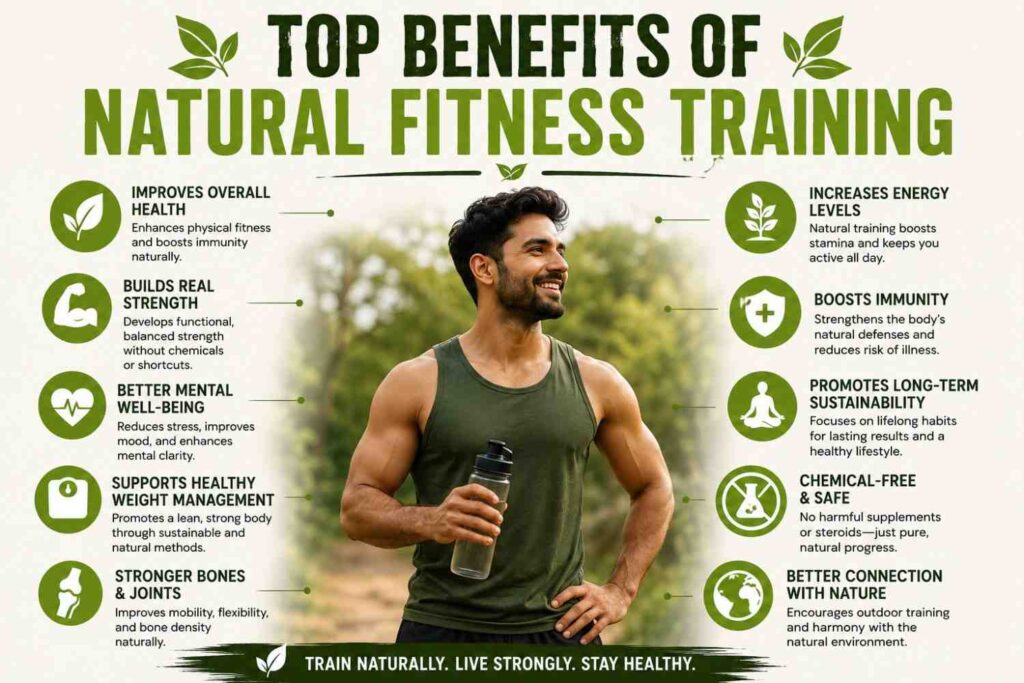
The top benefits of natural fitness training are not limited to looking fit or losing weight. This training style helps the body move better, feel stronger, and stay active for the long term. It uses simple movement patterns that already exist in daily life, such as walking, bending, pushing, pulling, squatting, lifting, and stretching.
Natural fitness training is a practical option for people who do not want a complicated gym routine. It can be done with bodyweight exercises, outdoor workouts, light resistance, mobility drills, and functional fitness movements. This makes it useful for beginners, busy adults, older people, and anyone who wants a simple way to stay active.
What Is Natural Fitness Training?
Natural fitness training is a method of exercise that focuses on natural body movement instead of relying only on machines or heavy gym equipment. It trains the body to move in ways that are useful in real life. Instead of isolating one muscle at a time, it often uses full-body movement patterns that improve strength, balance, flexibility, endurance, and control.
This type of training can include walking, running, hiking, climbing stairs, push-ups, squats, lunges, planks, stretching, crawling, carrying, and mobility work. It is simple, but it is not random. A good natural fitness routine still needs structure, correct form, gradual progress, and recovery. The aim is to make the body stronger and more capable in everyday life.
Natural Movement and Functional Fitness
Functional fitness means training your body for real-world movement. A squat helps with sitting and standing. A lunge supports walking, balance, and leg strength. A push-up builds upper-body strength for pushing movements. A plank supports core stability.
This is why natural fitness training feels practical. You are not only exercising to complete a workout. You are improving the way your body performs normal daily tasks. That makes it useful for people who want long-term strength, better posture, and easier movement.
Bodyweight Training and Fitness Without Equipment
Bodyweight training is one of the most common parts of natural fitness training. Exercises such as squats, push-ups, planks, lunges, step-ups, glute bridges, and wall sits can train the full body without expensive machines.
This makes fitness without equipment easier for beginners. You can start in a bedroom, living room, balcony, garden, or park. I recommend learning slow and controlled movement first. Once your form improves, you can increase repetitions, sets, or exercise difficulty.
Outdoor Workouts and Natural Exercise
Outdoor workouts are another strong part of natural exercise. Walking, jogging, hiking, stair climbing, cycling, and park circuits can make fitness feel more enjoyable and less repetitive.
Training outdoors may also support mental wellbeing because natural environments can feel refreshing and calming. It should not replace medical care, but it can become a healthy part of an active lifestyle. Many people also find outdoor workouts easier to maintain because they feel less like a strict routine.
Why Natural Fitness Training Supports Long-Term Health
Natural fitness training supports long-term health because it combines several important fitness areas in one approach. It can include aerobic exercise for heart health, bodyweight training for strength, mobility exercises for better movement, and balance work for stability. This makes it more complete than a routine that only focuses on one goal.
Another reason it works well is that it is sustainable. Many people stop exercising because the routine feels too difficult, expensive, or time-consuming. Natural fitness training removes many of those barriers. You can start small, use your own body weight, train at home, and build progress slowly over time.
It Supports Heart and Lung Health
Natural fitness training can include aerobic activities such as brisk walking, jogging, hiking, cycling, and stair climbing. These activities help improve cardiovascular fitness when done regularly.
Heart and lung health improve through consistent movement. You do not need to begin with intense workouts. A regular brisk walk can be a strong starting point. Over time, you can add short intervals, hills, stairs, or longer distances to increase the challenge.
It Builds Muscle Strength and Bone Support
Bodyweight exercises and resistance movements help strengthen muscles. Squats, lunges, push-ups, planks, step-ups, and rows all challenge the body against gravity or resistance.
Strength training also helps support daily function. Stronger legs help with stairs and walking. A stronger core supports posture. Stronger upper-body muscles help with pushing, pulling, and carrying. For long-term health, this type of training is very useful because it supports independence and daily movement.
It Helps With Weight Management
Natural fitness training can support weight management by increasing daily activity and helping build lean muscle. Walking, outdoor movement, bodyweight circuits, and strength exercises all add to total energy use.
However, weight management is not only about exercise. Food quality, portion control, sleep, hydration, and stress also matter. I recommend seeing natural fitness training as one important part of a full healthy lifestyle, not as a quick fix.
Natural Fitness Training vs Traditional Gym Workouts
Natural fitness training and traditional gym workouts can both be effective. The best choice depends on your goal, budget, schedule, access to equipment, and personal preference. Some people love gym machines and weights. Others prefer bodyweight training, outdoor workouts, and simple routines they can do anywhere.
The main advantage of natural fitness training is flexibility. It does not depend on a gym membership or fixed location. Traditional gym training, on the other hand, can be better for people who want heavy lifting, advanced muscle growth, or access to specific machines. In many cases, the best routine can include both methods.
| Factor | Natural Fitness Training | Traditional Gym Workouts |
|---|---|---|
| Equipment | Little or no equipment needed | Machines, weights, and tools available |
| Cost | Usually low-cost | Often requires membership |
| Location | Home, park, outdoors, travel-friendly | Usually gym-based |
| Skill level | Beginner-friendly | May require machine or lifting knowledge |
| Main benefit | Practical movement and consistency | Structured strength and equipment variety |
| Best for | Beginners, busy adults, outdoor exercisers | Heavy lifting and advanced muscle goals |
Flexibility and Accessibility
Natural fitness training is easy to start because it does not depend on a specific place. You can train at home, in a park, in a hotel room, or outside during a walk.
This flexibility helps people stay consistent. When exercise is easier to fit into daily life, it becomes less stressful. A short bodyweight workout or a 20-minute walk is much better than skipping exercise completely because you could not go to the gym.
Practical Strength for Daily Life
Gym training can build strength, but natural fitness training is especially good for practical movement. It trains the body to bend, balance, stabilize, push, pull, rotate, and carry.
This type of strength helps in daily situations. It can make stairs easier, improve posture, support lifting groceries, and help you move with more confidence. For many people, this practical strength is more valuable than only focusing on appearance.
When Gym Training May Still Help
Natural fitness training is powerful, but it does not mean gym workouts are useless. Gym training can be helpful for advanced strength goals, muscle building, sports performance, and targeted resistance work.
If your goal is to lift heavier weights or build specific muscle groups, gym equipment can help. A balanced approach may include natural bodyweight workouts during the week and gym-based resistance training once or twice a week.
How to Start a Safe Natural Fitness Training Routine
Starting natural fitness training does not mean doing hard workouts from day one. The safest way is to begin with simple movements, learn correct form, and slowly increase difficulty. A routine should include warm-up, strength work, cardio, mobility, and recovery.
A beginner should focus on consistency before intensity. Even 20 to 30 minutes of movement can be useful when done regularly. In my experience, people get better results when they choose a realistic routine instead of copying advanced workouts online.
Step 1: Check Your Current Fitness Level
Before starting, check your current ability. Can you walk for 20 minutes? Can you squat comfortably? Can you do a wall push-up? Can you balance on one leg for a few seconds?
This simple check helps you choose the right exercises. If you have pain, dizziness, heart concerns, joint issues, or a medical condition, speak with a qualified health professional before starting a new exercise routine.
Step 2: Build a Balanced Weekly Routine
A balanced natural exercise routine should include movement, strength, and mobility. For example, you can walk on most days, do bodyweight strength training two or three times per week, and add stretching after workouts.
A simple beginner routine may look like this:
| Day | Natural Fitness Activity |
|---|---|
| Monday | 25-minute brisk walk and light stretching |
| Tuesday | Squats, push-ups, planks, glute bridges |
| Wednesday | Easy walk or cycling |
| Thursday | Lunges, step-ups, side planks, mobility work |
| Friday | Outdoor walk or stair climbing |
| Saturday | Light full-body bodyweight circuit |
| Sunday | Rest or gentle stretching |
Step 3: Progress Slowly
Progress should be gradual. Add more repetitions, longer walks, extra sets, or harder variations only when your movement feels controlled.
Do not rush into advanced exercises. Poor form can increase injury risk. A slow and steady routine is better than an intense routine that causes pain and makes you stop after one week.
Best Natural Fitness Exercises to Include
The best natural fitness exercises are simple, useful, and easy to adjust. They should train the full body and support real movement patterns. A strong natural routine usually includes lower-body strength, upper-body strength, core stability, cardio, balance, and mobility.
You do not need to include every exercise in one workout. The goal is to build a small list of movements you can repeat safely and improve over time. Beginners should choose easier versions first, while advanced users can increase difficulty with tempo, volume, resistance bands, weighted backpacks, or harder body angles.
Bodyweight Strength Exercises
Good bodyweight strength exercises include squats, lunges, push-ups, planks, glute bridges, step-ups, and wall sits. These exercises train the legs, hips, chest, shoulders, arms, and core.
Beginners can modify every movement. Push-ups can be done against a wall. Squats can be done to a chair. Planks can be done from the knees. The most important rule is to keep the movement controlled and pain-free.
Cardio and Outdoor Movement
Walking is one of the easiest and most effective natural fitness activities. Brisk walking, hiking, cycling, jogging, stair climbing, and swimming can improve endurance when performed regularly.
Outdoor movement also adds variety. Slopes, stairs, trails, grass, and different walking routes can make the body adapt in small ways. This keeps training interesting and helps reduce boredom.
Mobility and Balance Exercises
Mobility and balance exercises improve control and movement quality. Useful options include hip circles, shoulder rotations, ankle mobility drills, hamstring stretches, single-leg stands, and controlled step-downs.
These exercises may look simple, but they are important. Better mobility can improve workout form, reduce stiffness, and make daily movement easier. Balance work is especially helpful for older adults and people who want better body control.
Common Mistakes to Avoid
Natural fitness training is simple, but simple does not mean careless. Many people start with good motivation but make mistakes that slow progress or increase injury risk. A good routine should feel challenging, but it should also feel safe and repeatable.
The most common problems are doing too much too soon, ignoring form, skipping recovery, and changing workouts too often. If you want long-term results, your training needs structure. You should know what you are doing, why you are doing it, and how you will progress.
Doing Too Much Too Soon
Beginners often feel excited and start with long circuits, daily intense workouts, or advanced exercises. This can lead to soreness, fatigue, or injury.
Start with two or three strength sessions per week. Add walking, light cycling, or gentle mobility on other days. This gives your body time to adapt and makes the routine easier to continue.
Ignoring Exercise Form
Good form matters more than speed. A slow squat with control is better than a fast squat with poor technique. The same applies to push-ups, lunges, planks, and step-ups.
Use mirrors, videos, or coaching when possible. If an exercise causes sharp pain, stop and choose an easier variation. Training should challenge your muscles, not punish your joints.
Skipping Recovery
Recovery is part of progress. Muscles need time to repair and grow stronger. Sleep, hydration, rest days, and light movement all support better results.
Natural fitness training should help you feel stronger over time. If you feel exhausted every day, your routine may be too intense. A sustainable plan is always better than a punishing one.
Who Can Benefit From Natural Fitness Training?
Natural fitness training can benefit many types of people because it can be adjusted to different fitness levels. It works for beginners, busy adults, outdoor fitness lovers, older adults, and people who want a low-cost way to stay active.
The reason it fits so many people is simple. The exercises can be made easier or harder. A beginner can do wall push-ups and chair squats. A stronger person can do decline push-ups, jump squats, hill sprints, or loaded carries. The same training idea can grow with your ability.
Beginners Who Want a Simple Start
Beginners often feel confused by gym machines, fitness apps, and complicated workout plans. Natural fitness training gives them a simple starting point.
They can begin with walking, chair squats, wall push-ups, light stretching, and short routines. This builds confidence. Once the basics feel easy, they can move toward harder bodyweight exercises.
Busy Adults and Professionals
Busy adults need fitness that fits real life. Natural workouts are helpful because they can be done in short sessions. A 20-minute bodyweight workout or a brisk walk during lunch can still support health.
This makes natural fitness training realistic. It removes the idea that exercise only counts if it happens in a gym for one full hour.
Older Adults Focused on Strength and Mobility
Older adults can benefit from safe strength, balance, and mobility work. Simple exercises can support daily function, walking confidence, and physical independence.
The routine should be gentle and controlled. Walking, light resistance, chair squats, balance drills, and mobility work can be useful. Exercises should always match the person’s ability and comfort level.
Frequently Asked Questions
This FAQ section answers common questions people ask before starting natural fitness training. These answers are written for beginners and general readers who want clear, practical guidance. The goal is to help you understand what natural fitness training does, how it works, and how to start safely.
Quick Answer About Top Benefits of Natural Fitness Training
The top benefits of natural fitness training include better strength, improved mobility, stronger heart health, better posture, easier weight management, and a more sustainable exercise routine. Natural fitness training focuses on practical movements such as walking, squats, lunges, push-ups, stretching, climbing, and outdoor workouts. It is useful because it can be done at home, in a park, while traveling, or with little equipment. In my experience, its biggest advantage is consistency. People are more likely to continue exercising when the routine feels simple, flexible, and realistic.
What is natural fitness training?
Natural fitness training is exercise based on natural movement patterns such as walking, squatting, pushing, pulling, bending, balancing, and stretching. It often uses bodyweight training, outdoor workouts, and functional fitness movements. The goal is to improve strength, endurance, mobility, and real-life movement quality.
Is natural fitness training good for beginners?
Yes, natural fitness training is good for beginners because it can start with simple exercises and little or no equipment. Beginners can use wall push-ups, chair squats, short walks, and light stretching. The key is to start slowly, learn proper form, and build consistency before increasing intensity.
Can you build muscle with natural fitness training?
Yes, you can build muscle with natural fitness training, especially through bodyweight exercises and progressive resistance. Squats, push-ups, lunges, step-ups, and planks can challenge muscles. To keep improving, increase difficulty slowly and support training with proper nutrition and recovery.
Is natural fitness training better than gym workouts?
Natural fitness training is better for flexibility, accessibility, and practical daily movement. Gym workouts may be better for heavy lifting and advanced muscle-building goals. Many people get the best results by combining both approaches based on their goals and lifestyle.
How often should I do natural fitness training?
Most beginners can start with two or three strength sessions per week, plus regular walking or light cardio. Mobility work can be added several times a week. The best schedule depends on your current fitness level, recovery, goals, and health condition.
What are the best natural fitness exercises?
The best natural fitness exercises include squats, lunges, push-ups, planks, glute bridges, step-ups, walking, stair climbing, and mobility drills. These movements train strength, balance, endurance, and control. Choose exercises that match your ability and improve them gradually.
Does natural fitness training help with weight loss?
Natural fitness training can help with weight loss by increasing daily activity, improving strength, and supporting a more active lifestyle. However, weight loss also depends on nutrition, sleep, stress, and total calorie balance. It works best as part of a complete healthy routine.
Conclusion
The top benefits of natural fitness training include stronger muscles, better mobility, improved endurance, easier access to exercise, better posture, and a more sustainable fitness routine. It works because it uses natural movement patterns that support daily life.
This training style is simple, but it can still be powerful when done consistently. You can start with walking, squats, push-ups, planks, stretching, and light outdoor workouts. Over time, you can increase difficulty and build a stronger, healthier body.
Natural fitness training is especially useful for beginners, busy adults, and anyone who wants a realistic approach to long-term health. Start small, focus on form, stay consistent, and progress slowly.